Frequently Asked Questions about the Neighbourhood Model of Health and Wellbeing
This FAQ section has been developed to support understanding of the Neighbourhood Model of Health and Wellbeing
What is the Neighbourhood Model of Health and Wellbeing?
The Neighbourhood Model of Health and Wellbeing is a new approach to delivering health and social care services in Northern Ireland. It aims to improve health outcomes by bringing services together around local communities, focusing on prevention, early intervention and delivering more care closer to home.
Why is a Neighbourhood Model being introduced?
Northern Ireland’s health and social care system faces rising demand, long waiting lists and pressure on all services including hospitals. Refocusing the system to resource the shifting of more care into communities will help people get support earlier, improve outcomes and reduce the need for avoidable ambulance and hospital use.
What is a neighbourhood approach?
A neighbourhood approach brings local health, social care and community services together to support people earlier and closer to home. It focuses on prevention, joined‑up working and understanding the needs of local communities.
What is meant by a “neighbourhood”?
A neighbourhood is a local population area where services work together around the needs of people who live there. The Model recognises that different communities have different strengths, needs and priorities.
When will it be implemented?
The Neighbourhood Model is being developed and introduced in a phased approach:
- Design Phase September 2025 to January 2026:
Agreeing the vision and underpinning principles for NI neighbourhood care and identifying best practices through a call for evidence.
- Build Phase January to April 2026:
Publishing the policy guidelines and results of the call for evidence, establishing a neighbourhood development programme and systems for delivery.
- Implementation Phase from April 2026:
Starting implementation, supporting establishment of the integrated neighbourhood teams and systems for measuring out comes, evaluating, investing, testing and scaling up good practice.
How will the Neighbourhood Model operate in Northern Ireland?
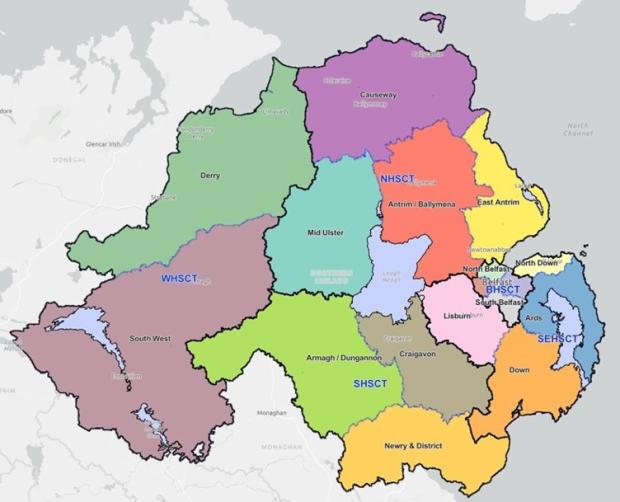
Seventeen Integrated Neighbourhood Teams will serve communities across Northern Ireland, working within GP Federation areas (see Figure 1). These teams will plan and deliver care together, building strong links with the smaller neighbourhoods they support.
Figure 1: GP Federation Map
What are Integrated Neighbourhood Teams?
Integrated Neighbourhood Teams (INTs) are multidisciplinary teams bringing together GPs, community pharmacy, nursing, allied health professionals, social care, voluntary and community organisations, councils and other partners. Their role is to coordinate care and respond to the needs of their local communities
What are the potential benefits of the Neighbourhood Model for the public?
People will receive care earlier and closer to their home, with services working more smoothly together. This approach aims to improve health outcomes, reduce the need for unnecessary hospital visits and ambulance conveyances and strengthen community support.
What are the potential benefits of the Neighbourhood Model for the Health and Social Care system?
Expected outcomes include a reduction in avoidable hospital admissions, Emergency Department attendances, and ambulance conveyances to hospital, alongside improved discharge processes and patient flow, supported by a stronger focus on proactive and preventative care to enhance patient outcomes and service efficiency.
How will the Neighbourhood Model be funded?
A mixed funding approach will support the model, using existing resources, invest‑to‑save opportunities and external funding partnerships. This ensures long‑term change can get started, grow steadily and sustainably.
How will resources be shifted from hospital to neighbourhood delivered services?
The Department of Health expects that Health and Social Care Trusts progressively shift approximately 2% of hospital-based expenditure each year into neighbourhood-delivered services over a three-year period, starting in 2026/27.
How much funding is expected to be transferred?
The ambition is to realign services to an initial value of approximately £50 million per year over each of the next three years.
Who is responsible for delivering this change?
Health and Social Care Trusts are responsible for developing and implementing plans, working in partnership with Integrated Neighbourhood Teams, GPs, community providers, social care, VCSE organisations and other stakeholders.
Why is the focus initially on older people?
Older people often have the greatest need for health and social care and can face the biggest challenges in accessing timely support. By focusing on them first the Neighbourhood Model aims to deliver earlier, proactive care that helps people stay well at home for longer and avoid unnecessary hospital visits and stays.
What does "care closer to home" mean?
It means providing more treatment, support and monitoring within community settings rather than hospitals where clinically appropriate. This includes outpatient services, diagnostics, preventative care, social care and specialist support delivered nearer to where people live.
Will hospital services still be available?
Yes. Hospital services will continue to play a vital role. The aim is to ensure that people receive care in the setting that best meets their needs, with hospital services focused on those who require specialist or acute care.
Will patients still see specialists?
Yes. Specialist care remains essential for those who need it, but the model aims to increase opportunities for the right type of advice, outreach and support to be delivered closer to home where appropriate.
What changes might be made to outpatient services?
Services may explore alternatives such as virtual appointments, patient-initiated follow-ups, shared care models, and community-based clinics where these are clinically appropriate.
What is meant by redesigning clinical pathways?
It means changing the way patients access services so that more care can be provided by GPs, multidisciplinary teams, community pharmacies and neighbourhood services with specialist support available when needed
How does neighbourhood working support hospital discharge?
Neighbourhood teams can help coordinate services, provide support at home, and ensure people have access to the right care after leaving hospital, enabling safe and timely discharge.
What is Social Prescribing?
Social prescribing connects people with community-based activities and support such as exercise programmes, volunteering opportunities, welfare advice, peer support and social groups to improve health and wellbeing. The model plans to embed social prescribing within neighbourhood teams.
How will information be shared between services?
A key pillar of the model focuses on digital innovation, intelligence and evaluation. Modern digital systems and better information sharing will help professionals work together to provide coordinated care. Personal information will continue to be protected by strict privacy and security standards.
What is the difference between the Integrated Neighbourhood Teams (INTs) and previous models like the Integrated Care Partnerships (ICPs)?
INTs will bring providers together to consider how they can work together on the day-to-day delivery of services for their community with shared priorities and local decision making rather than acting as an advisory or planning forum like ICPs. INTs will also have membership, representative of local services, and will have a strong focus on offering more care closer to home for the communities they serve by working together as part of long-term system change.
How will the Neighbourhood Model link with AIPBs?
AIPBs will adapt their role to strengthen local planning and integrated working alongside the new neighbourhood teams. Their expertise will support community planning and ensure strong alignment across the system between health and social care and other public services that offer support for the wider determinants of health, including housing.
How will the new Neighbourhood Model support the implementation of other strategic reforms in health and social care?
The Neighbourhood Model for Health and Wellbeing is designed to complement and strengthen wider system reforms by creating local teams that can put these strategies into practice in a coordinated and community-focused way. By bringing providers together at neighbourhood level, INTs will help ensure that changes in adult social care, mental health, community pharmacy, nursing and general practice are better connected, easier to access and delivered closer to home.