Northern Ireland Hospital Statistics Urgent and Emergency Care (2025/26)
Date published:
The Department of Health today published annual statistics on activity and waiting times at emergency care departments (ED), in Northern Ireland during the year ending 31st March 2026.

The statistical bulletin presents information on the total activity at EDs in Northern Ireland during 2025/26, including information on new, unplanned, and planned review attendances, waiting times at EDs, ambulance response times, calls and incidents.
The Northern Ireland Hospital Statistics: Urgent and Emergency Care (2025/26) publication is the first in the series of three ‘Hospital Statistics’ statistical publications due for release in the coming months, with the further two detailing information on inpatient activity and outpatient activity.
This information release is published on the Departmental website here.
Key Points
Latest Position (2025/26)
- During 2025/26, 820,443 patients attended emergency departments; 752,960 (91.8%) were new attendances, and 51,384 (6.3%) were unplanned review attendances. For a further 16,099 (2.0%) of the attendances, which are from Craigavon and Daisy Hill UCCs, a breakdown is not available.
- In 2025/26, 178,846 calls were received by Phone First services, of which, 117,003 (65.4%) resulted in the patient being referred to an ED, whilst 61,843 patients did not get referred to an ED.
- During 2025/26, 32.5% of new and unplanned review attendances at Type 1 EDs were treated and discharged, or admitted, within 4 hours of their arrival, compared with 84% at Type 3 departments.
- Over one in six (17.3%, 139,108) new and unplanned review attendances at EDs waited longer than 12 hours to be either treated and discharged home, or admitted.
- Almost three fifths (57.5%) of patients attending EDs in 2025/26 commenced their treatment within 2 hours of being triaged.
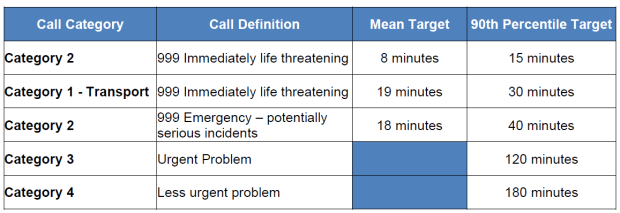
- The NIAS Category 1 mean (8 minutes) target and 90th percentile target (15 minutes) were not achieved in any month during 2025/26.
- The NIAS Category 1T mean (19 minutes) target was achieved in each month during 2025/26, whilst the 90th percentile (30 minutes) target was also achieved in each month.
Comparison with Previous Year (2024/25 – 2025/26)
- Since 2024/25, the number of new and unplanned review attendances at EDs increased by 18,974 (2.4%), from 801,469 to 820,443 in 2025/26.
- Whilst the number of attendances increased between 2024/25 and 2025/26, performance against the 4 hour waiting times target decreased from 45.7% to 43.3%.
- The number of patients spending over 12 hours in an ED increased in 2025/26 (139,108) compared with 2024/25 (133,285).
Five Year Trends (2021/22 – 2025/26)
- During the last six years since the COVID-19 pandemic, the number of ED attendances (new and unplanned reviews) increased by 71,861 (9.6%), from 748,582 in 2021/22 to 820,443 in 2025/26.
- Whilst the number of attendances increased between 2020/21 and 2024/25, performance against the 4 hour waiting time target declined from 54.8% to 43.3% in 2025/26.
- The number of patients spending over 12 hours in an ED increased markedly from 78,969 (10.9%) to 139,108 (17.3%) in 2025/26.
- Since 2021/22, the proportion of attendances referred by a GP decreased from 15.3% to 12.4% in 2025/26.
The information release is published on the Departmental website at:
https://www.health-ni.gov.uk/articles/emergency-care-and-ambulance-statistics
Notes to editors:
- All information presented in this publication has been provided by HSC Trusts or downloaded by Hospital Waits Information Branch (HWIB) within an agreed timescale and validated and quality assured by HWIB prior to release. At the end of each financial year HWIB verify with HSC Trusts that the information downloaded / submitted during the year is consistent and up to date. Further information can be found in additional guidance and quality documents on the DoH website.
https://www.health-ni.gov.uk/articles/emergency-care-and-ambulance-statistics - Information which presents a summary of the emergency care clinical quality indicators for Northern Ireland has also been included in this release. This information is not Accredited Official Statistics but is included to provide a more comprehensive and balanced view of the care delivered by EDs and reflects the experience of patients and the timeliness of the care they receive.
- The statistics within this publication has been assessed to the standard of Accredited Official Statistics, however during implementation and stabilisation of the change of data source to the encompass system, they are considered to be ‘official statistics in development’ which are a subset of Official Statistics in line with the Code of Practice for Statistics. While caution must be exercised when using these figures, they are a meaningful representation of what they measure and are of sufficient quality for publication and use. Figures in this report sourced from NIAS are considered to ‘official statistics in development’.
- This also applies to the Clinical Quality Indicators that historically have been published as Official Statistics and not Accredited Official Statistics, and are based on source of referral, method of arrival and destination on discharge from ED. These have been provided to give a more comprehensive overview of activity at EDs across Northern Ireland. These fields are recorded on encompass, and then mapped by DoH to a set of agreed regional codes. A review of the mapping of these codes from the encompass system was undertaken, and a new set of regionally agreed codes was produced. A validation exercise has begun and will be ongoing throughout 2026.
- Readers are advised to be cautious when making direct comparisons between Northern Ireland and other UK Jurisdictions as waiting times may not be measured in a comparable manner. It should also be noted that the way in which emergency care services are delivered differs between UK jurisdictions. This means that the number and types of patients included in the figures may differ between countries. In particular, the 12 hour waiting time information published by England and Northern Ireland is not equivalent and should not be compared. Further information on comparability between Northern Ireland and other UK Jurisdictions is detailed in Appendix 5 of this statistical publication.
- There are three separate categories of emergency care facility included in this publication:
Type 1 Department A consultant led 24 hour service with full resuscitation facilities and designated accommodation for the reception of emergency care patients.
Type 2 Department A consultant led mono specialty emergency care service (e.g. ophthalmology, dental) with designated accommodation for the reception of patients. Currently there are no Type 2 EDs in Northern Ireland.
Type 3 Department Other type of ED/minor injury activity with designated accommodation for the reception of emergency care patients. The department may be doctor led, general practitioner led or nurse led and treats at least minor injuries and illnesses and can be routinely accessed without appointment. A service mainly or entirely appointment based (for example a GP Practice or Out-Patient Clinic) is excluded even though it may treat a number of patients with minor illness or injury. Includes Urgent Treatment Centres. - The draft Ministerial targets for emergency care waiting times stated that:
“95% of patients attending any Type 1, 2 or 3 Emergency Department should be either treated and discharged home, or admitted, within four hours of their arrival in the Department; and no patient attending any Emergency Department should wait longer than 12 hours”.
“[…], at least 80% of patients to have commenced treatment, following triage, within 2 hours.” - Please note, patients with lower acuity can attend more appropriate services available at Minor Injury Units (MIU) and avoid potentially longer attendances at a Type 1 Emergency Department (ED). Prior to the introduction of MIUs, these patients would have otherwise
attended a Type 1 ED and would have generally been discharged within 4 hours. As such, this will result in an increase to the percentage of patients at Type 1 EDs who wait longer than 4 hours. - Information on the new urgent care services; (i) PhoneFirst and (ii) Urgent Care Centres, introduced in late 2020 as part of the ‘No More Silos’ action plan, are included in this statistical report. These services assess patients’ needs before arrival at an ED, and ensure they receive the right care, at the right time, and in the right place, outside ED if appropriate. The number of patients contacting / attending these urgent care services are reported, alongside those attending an ED, to provide readers with a comprehensive view of urgent and emergency care services in Northern Ireland.
- NIAS implemented a new Clinical Response Model (CRM) on 12th November 2019. Information provided by NIAS from this date is not comparable to the previous CRM.
The new call categories and targets are as follows.
Decorative graphic - Figures incorporate all returns and amendments received up to 10th June 2026.
Further information on Emergency Care Statistics is available from:
Hospital Waits Information Branch
Department of Health
Annexe 2, Castle Buildings
Stormont,
BT4 3SQ
Email: statistics@health-ni.gov.uk
Internet: DoH Statistics and Research - For media enquiries please contact DoH Press Office by e-mail: pressoffice@health-ni.gov.uk
- Follow us on: Facebook Department of Health NI, nstagram departmentofhealthni X @healthdpt , LinkedIn Department of Health NI
- The Executive Information Service operates an out of hours service for media enquiries only between 1800 hrs and 0800 hrs Monday to Friday and at weekends and public holidays. The duty press officer can be contacted on 028 9037 8110.